
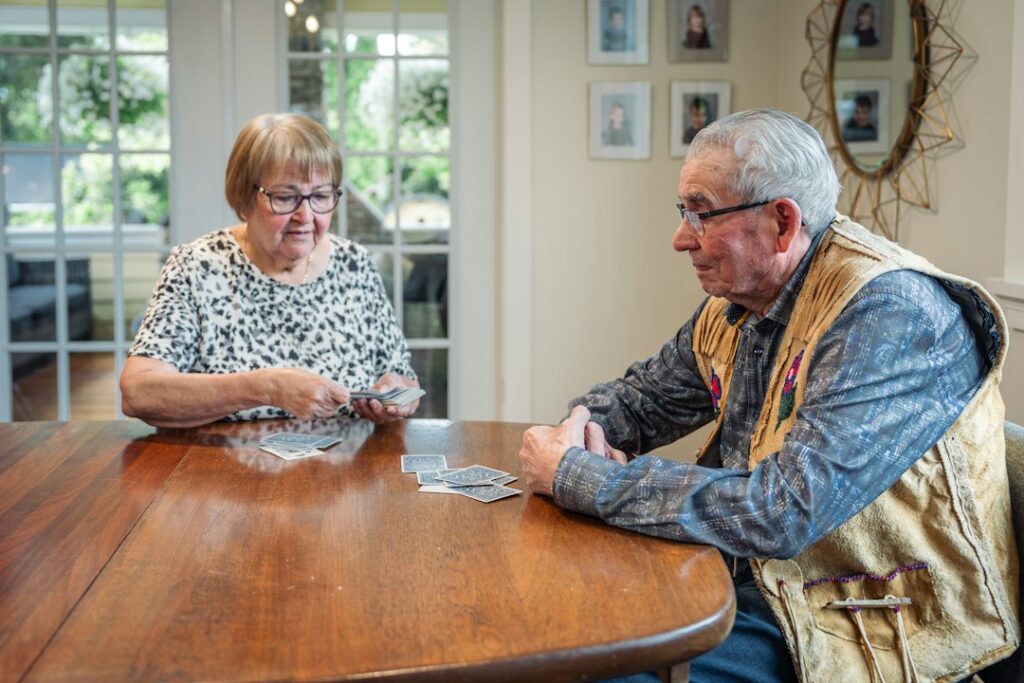
What games and pastimes are popular in assisted living?
Residents in assisted living often enjoy activities that are familiar, social, adaptable, and easy to begin. Favorite pastimes may include card games, bingo, puzzles, music, crafts, reading, gentle exercise, seasonal activities, and conversation-based games.
The most enjoyable activity is not always the most complicated. A simple game can be meaningful when it encourages laughter, brings back pleasant memories, or gives residents a reason to spend time together. Activities also work best when residents can participate at different skill levels without feeling rushed or judged.
Which card and table games work well for older adults?
Card games remain popular because they are familiar, portable, and easy to adjust. Many residents enjoy games they played with family members or friends earlier in life.
Common choices include:
- Rummy and other matching games
- Pinochle or simpler trick-taking games
- Uno-style color and number games
- Go Fish
- Old Maid
- Canasta
- Solitaire
- Large-print playing card games
Table games can include dominoes, checkers, cribbage, and simple dice games. For residents with arthritis, reduced vision, or limited hand strength, larger cards, card holders, lightweight pieces, and nonslip mats can make participation easier.
Rules may also need to be simplified. The purpose is social enjoyment rather than strict competition. A familiar game can be shortened, played in teams, or changed so that residents focus on conversation and participation.
Is bingo still a good activity in assisted living?
Bingo continues to be a useful group activity because it has a clear structure and can accommodate many ability levels. Players can sit comfortably, follow a predictable pattern, and enjoy the excitement of each call.
Large-print cards and high-contrast markers are helpful for residents with vision changes. Staff or volunteers may need to call numbers slowly, repeat them, and pause between calls. Some residents may prefer picture bingo, word bingo, music bingo, or themed versions based on holidays, seasons, or familiar subjects.
Bingo does not have to be limited to numbers. A music version might use recognizable songs, while a picture version could feature household objects, animals, foods, or scenes from nature.
What pastimes are suitable for residents with memory loss?
Residents living with memory loss may benefit from activities that emphasize familiarity, sensory experiences, and success rather than complex rules. Short, predictable activities are often easier to enjoy than long sessions with many instructions.
Helpful options may include:
- Sorting large buttons, cards, or colored objects
- Looking through picture books or family photo albums
- Completing simple puzzles with large pieces
- Folding towels or pairing socks
- Listening to familiar music
- Decorating cookies or assembling simple snacks
- Discussing local seasons, holidays, or household traditions
A resident who cannot complete a standard puzzle may still enjoy sorting pieces by color or identifying familiar pictures. The activity can be adjusted without drawing attention to the change.
Conversation is often part of the pastime. A photograph, old-fashioned kitchen item, or familiar song may prompt stories about school, work, family, farming, holidays, or community life.
Which creative activities are easy to adapt?
Arts and crafts can support self-expression without requiring artistic training. Watercolor painting, coloring, seasonal decorations, simple collages, and greeting cards are accessible choices for many residents.
Materials should be selected with comfort and safety in mind. Large-handled brushes, washable markers, lightweight paper, and easy-grip scissors may help residents with limited dexterity. Some people may prefer arranging materials or choosing colors rather than completing every step themselves.
Crafts can reflect the time of year. In Punxsutawney, changing weather and long winter periods may make indoor creative activities especially appealing. Spring flowers, autumn leaves, winter scenes, and holiday decorations can provide familiar subjects for conversation as well as decoration for shared spaces.
The finished project matters less than the process. A resident may enjoy touching materials, choosing colors, or working beside another person even if the result looks unfinished.
How do music and singing benefit residents?
Music is a flexible pastime that can be enjoyed individually or in a group. Singing familiar songs, listening to recorded music, tapping along with a rhythm, or discussing favorite performers can create a comfortable social atmosphere.
Music may be especially meaningful for residents who have difficulty finding words during conversation. A person may remember a melody or chorus even when other details are difficult to recall. This does not mean every resident will respond positively to music, so preferences should guide the activity.
Useful formats include:
- Sing-alongs with familiar songs
- Listening sessions organized by decade or theme
- Simple rhythm instruments
- Dancing while seated
- Music trivia
- Sharing memories connected to songs
Volume should remain comfortable, particularly for residents who use hearing aids or become overwhelmed by loud sounds.

What physical pastimes can be done safely indoors?
Gentle movement can be included in daily recreation without turning the activity into a formal workout. Seated stretching, balloon volleyball, scarf movements, walking groups, and simple rhythm exercises may help residents stay active within their abilities.
Activities should allow residents to remain seated or use mobility supports when needed. Clear pathways, stable chairs, adequate lighting, and supervision are important for residents at risk of falling. The goal is comfortable participation, not speed or athletic performance.
During icy, snowy, or very cold weather, indoor movement may provide a practical alternative to outdoor walks. Short sessions can be spread throughout the day rather than requiring residents to participate for a long period at once.
Any activity involving standing, reaching, or walking should be adjusted for individual medical and mobility needs. Residents should stop if they feel pain, dizziness, unusual shortness of breath, or fatigue.
How can reading and conversation become shared activities?
Reading does not have to be a solitary pastime. Large-print books, newspapers, short stories, poetry, devotional material, magazines, and audiobooks can support individual interests and group discussion.
A reading group may focus on one short story or a few pages rather than an entire book. Participants can discuss characters, memories, familiar places, or personal reactions. Some residents may prefer listening while others read along.
Conversation activities can include:
- “Would you rather” questions
- Identifying household objects from the past
- Sharing favorite recipes
- Discussing seasonal traditions
- Reminiscing about school, work, or family celebrations
- Completing familiar sayings or song lyrics
Questions should be open-ended and respectful. Residents should never be pressured to share private memories or personal information.
How can families support enjoyable pastimes?
Families can help by sharing information about a resident’s interests, former hobbies, favorite music, and comfort level with competition. A person who once enjoyed gardening may appreciate seed catalogs, flower arranging, or nature photographs even if outdoor gardening is no longer practical.
Personal history can also prevent mismatched activities. Someone who disliked competitive games may prefer crafts, music, or quiet conversation. Another resident may enjoy a lively card table but become frustrated by puzzles.
Small personal items, such as family photographs, recipe cards, postcards, or familiar books, can support meaningful activities without requiring expensive equipment. The most useful approach is to notice what helps a resident relax, participate, and connect with others, then build from those observations.
What makes an assisted living activity successful?
A successful pastime gives residents choice, comfort, and a reasonable chance to participate. Activities should be offered at varied times and in different formats because energy, attention, hearing, vision, and mobility can change from day to day.
Good activity planning usually includes:
- Clear instructions given one step at a time
- Options for quiet and social participation
- Materials that are easy to see and handle
- Enough time to respond without rushing
- Adaptations for memory, hearing, vision, and mobility
- Permission to watch rather than participate
- A welcoming atmosphere that does not emphasize winning
Games and pastimes are most valuable when they support connection and dignity. A resident may remember the laughter around a card table, the comfort of a familiar song, or the satisfaction of finishing a small craft long after the activity itself has ended.
